Executive Summary & Core Capabilities
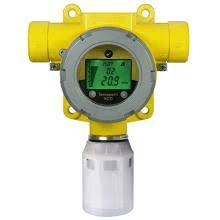
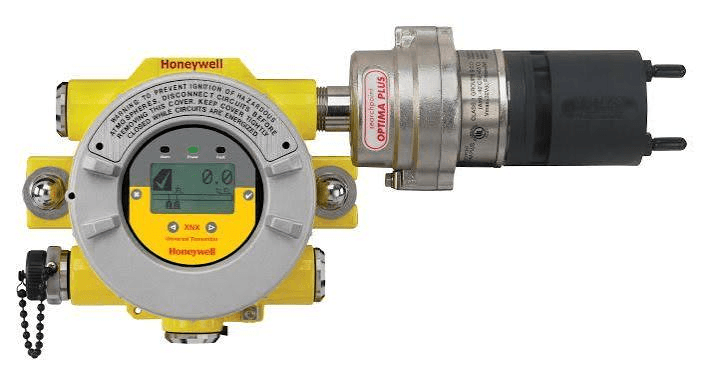
The Honeywell Searchpoint Optima Plus is a field-proven point infrared hydrocarbon gas detector engineered for continuous gas monitoring in challenging operational environments. Conventional catalytic bead sensor heads frequently suffer poison degradation from silicones, sulfur compounds, and heavy solvents. The optical infrared measuring engine of the Searchpoint Optima Plus eliminates poisoning risks while maintaining fast detection speeds and stable optical tracking without requiring oxygen.
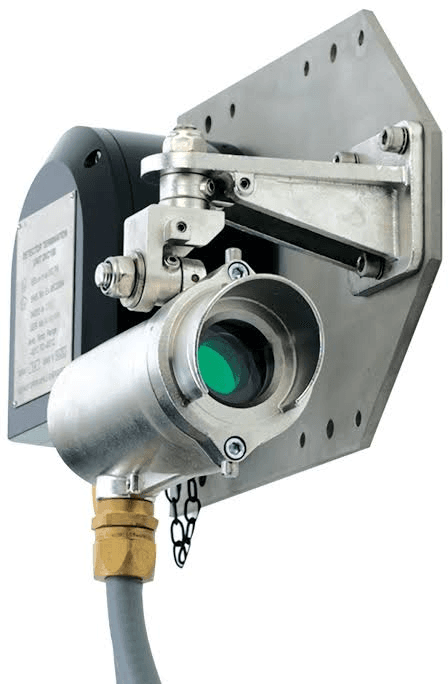
Housed in a corrosion-resistant electro-polished 316 stainless steel enclosure rated to IP66/67, the Searchpoint Optima Plus thrives in severe marine offshore platforms, FPSOs, and coastal oil terminals exposed to heavy salt spray and high humidity.
- Immune to Sensor Poisoning: Unlike older catalytic gas sensors that burn out when exposed to common airborne chemicals, the infrared optics never wear out from exposure to high gas concentrations or poisons.
- No False Alarms from Fog or Dirt: Dynamic internal heating prevents condensation buildup on internal mirrors, keeping signal paths clear during extreme weather shifts.
- Fast Emergency Warning: Detects methane leak shifts with a response time under 3 seconds, triggering safety shutdowns before hazardous gas clouds reach lower explosive limits (LEL).
- Low Cost of Ownership: Requires no routine sensor head replacements and supports remote gas testing accessories to minimize hazardous zone maintenance labor.
At the center of the Searchpoint Optima Plus is Honeywell’s 4-channel dual-compensated optics block. Standard two-channel IR detectors compensate for dust or mirror degradation, but remain susceptible to component aging and temperature swings.
The Optima Plus architecture utilizes twin active and reference measurement channels running across distinct spectral bandwidths. This quadrupled optical setup monitors both environmental degradation and source component drift simultaneously. Coupled with dynamic optical heating, it provides zero-point stability across extreme temperatures ranging from -40 °C to +65 °C.
Technical Specifications & Performance Matrix
| Metrology Parameter | Engineering Specification |
|---|---|
| Detection Technique | 4-Channel Dual Compensated Point Infrared (IR) |
| Measuring Range | 0 to 100% LEL (Lower Explosive Limit) Hydrocarbons |
| Hydrocarbon Accuracy | Baseline < ±1% FSD; 50% FSD < ±2% FSD |
| Ethylene Accuracy | Baseline < ±2% FSD; 50% FSD < ±3% FSD |
| Response Speed ( / ) | , (Methane) |
| Operating Temperature | -40 °C to +65 °C (-40 °F to +149 °F) |
| Interface Component | Technical Profile |
|---|---|
| Analog Output | 4-20 mA autosensing sink or source mode |
| Digital Protocols | HART 7 over 4-20mA; Modbus RS485 via XNX |
| Power Input | 18 to 32 VDC (24 VDC nominal) |
| Power Draw | < 4.5 Watts peak operating draw |
| Local Field Interface | Compatible with Honeywell OELD Bluetooth Display |
| Compliance Metric | Specification |
|---|---|
| Enclosure Metallurgy | Electro-polished 316 Stainless Steel |
| Ingress Rating | IP66 / IP67 environmental sealing |
| Net Unit Weight | 1.6 kg (3.5 lbs) |
| Functional Safety | IEC 61508 SIL 2 certified |
| Hazardous Approvals | ATEX, IECEx, UL, CSA Class 1 Div 1 |
| Marine Certifications | MED, DNV, Bureau Veritas, ABS, Lloyd's Register |
Target Industry Applications
Offshore Oil & Gas Platforms
Protects oil production topsides, FPSO vessels, and marine loading terminals from volatile hydrocarbon gas leaks in aggressive saltwater marine environments.
Refineries & Processing Facilities
Monitors processing units, valve manifolds, and gas compressor stations prone to chemical contaminants that ruin standard catalytic bead gas sensors.
Official Provider Resources & Technical Documentation
For technical handbooks, HART EDD files, and direct engineering guidance from Honeywell, consult the official manufacturer resources below: